Comparing Textile Printing Methods: Screen Printing, DTF, Flex, and Embroidery
Screen printing, DTF, flex foil, or embroidery? Each method has its strengths. Our comparison shows which suits your design, quantity, and fabric.
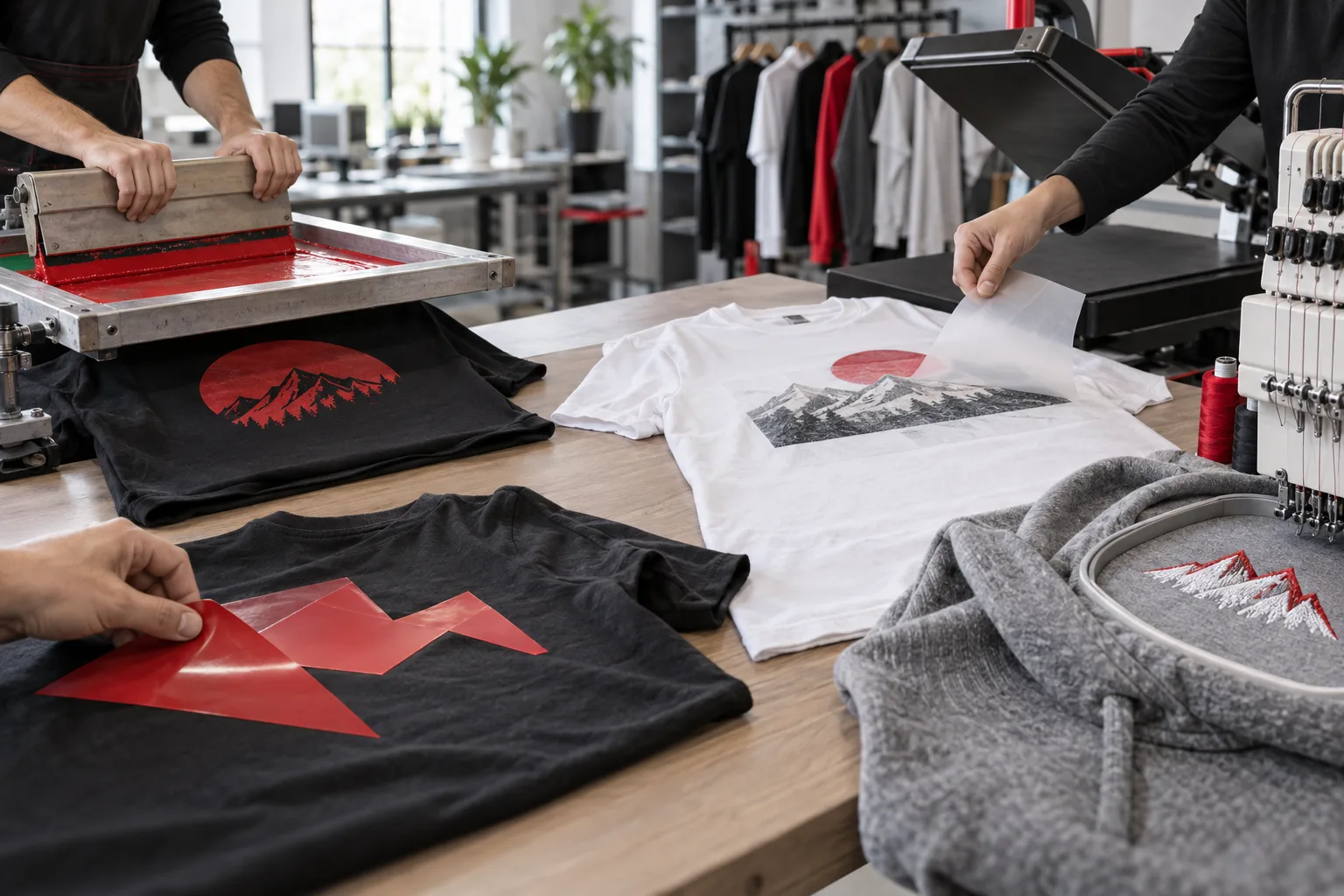 AI-generated image
Textile printing methods in brief: For simple designs in large quantities, screen printing is ideal. For colorful, detailed designs and small runs, DTF transfer stands out. Flex foil is perfect for names and numbers, such as on jerseys. Embroidery offers a premium, durable look on polo shirts, jackets, and caps.
- Design, quantity, and fabric determine the method.
- Screen printing: large runs, few colors.
- DTF: photorealistic, even single pieces.
- Embroidery: premium and highly durable.
Overview of Textile Printing Methods
| Method | Ideal for | Strengths | Limitations |
|---|---|---|---|
| Screen Printing | large runs, logos with few colors | very durable, cost-effective for high quantities | setup required per color |
| DTF Transfer | colorful designs, photos, small runs | many colors, works on various materials | print surface slightly noticeable |
| Flex/Velvet Foil | names, numbers, simple lettering | very vibrant, ideal for individual personalization | not suitable for fine details or gradients |
| Embroidery | polo shirts, jackets, caps, workwear | elegant, extremely durable | limited fine detail, larger designs more complex |
| Direct-to-Garment Printing | light-colored cotton textiles, single pieces | soft feel, photorealistic | mainly suitable for cotton |
Which Method for Which Purpose?
Club and Team Shirts
Use the club logo with screen printing or DTF, and names and numbers in flex foil – combining cost-efficiency and personalization. More tips in Printing Club Apparel.
Workwear
For frequently washed garments, embroidery and screen printing are especially durable. Protective workwear has special requirements – please contact us. Detailed info: Workwear with Logo.
Events and Single Pieces
For bachelor parties, anniversaries, or photo gifts, DTF or direct printing is the most flexible solution, as small quantities are possible.
What Do We Need for a Good Print?
- Your logo as a vector file (SVG, PDF, or EPS) – see Logo Guide.
- Color specifications, ideally with spot color values.
- Desired position and size of the design.
- Type of fabric, colors, and size distribution.
Care Tips for Long-Lasting Textile Prints
- Turn printed textiles inside out and wash at mild temperatures.
- Do not use fabric softener.
- Do not iron directly on the print or foil.
- Follow the manufacturer's care instructions on the label.
Which Textiles Can Be Customized?
T-shirts, polos, hoodies, jackets, caps, bags, aprons, and many other textiles can be printed or embroidered. The material is crucial: cotton works with almost all methods, functional polyester fabrics require suitable inks and temperatures, and for water-repellent jackets, embroidery or special transfers are often best. We check suitability before production and create samples if needed.
Conclusion
The best method depends on design, quantity, and purpose. MYPOINT offers honest advice and combines multiple methods if needed – Request Textile Printing.