Flyer Printing: Formats, Fold Types & Design Tips
A flyer must convince within seconds. We explain common formats and fold types and give tips for design, text and print run.
 AI-generated image
Flyer printing, in short: The most popular flyer formats are DIN long (99 × 210 mm), DIN A6 and DIN A5. For more content, folded flyers are suitable, such as a DIN A4 sheet with a roll fold to DIN long format. Key to success are a clear message, an eye-catching headline, and a clear call to action.
- DIN long fits standard envelopes and brochure holders.
- Folded flyers offer space for services, prices, and contact details.
- One message per flyer is most effective.
- Don’t forget contact info, QR code, and call to action.
Flyer Printing & Common Formats
| Format | Dimensions | Typical Use |
|---|---|---|
| DIN A6 | 105 × 148 mm | Handouts, vouchers, invitations |
| DIN long | 99 × 210 mm | Price lists, menus, info flyers |
| DIN A5 | 148 × 210 mm | Offers, events |
| DIN A4 | 210 × 297 mm | Product sheets, posters |
Which Fold Type Fits?
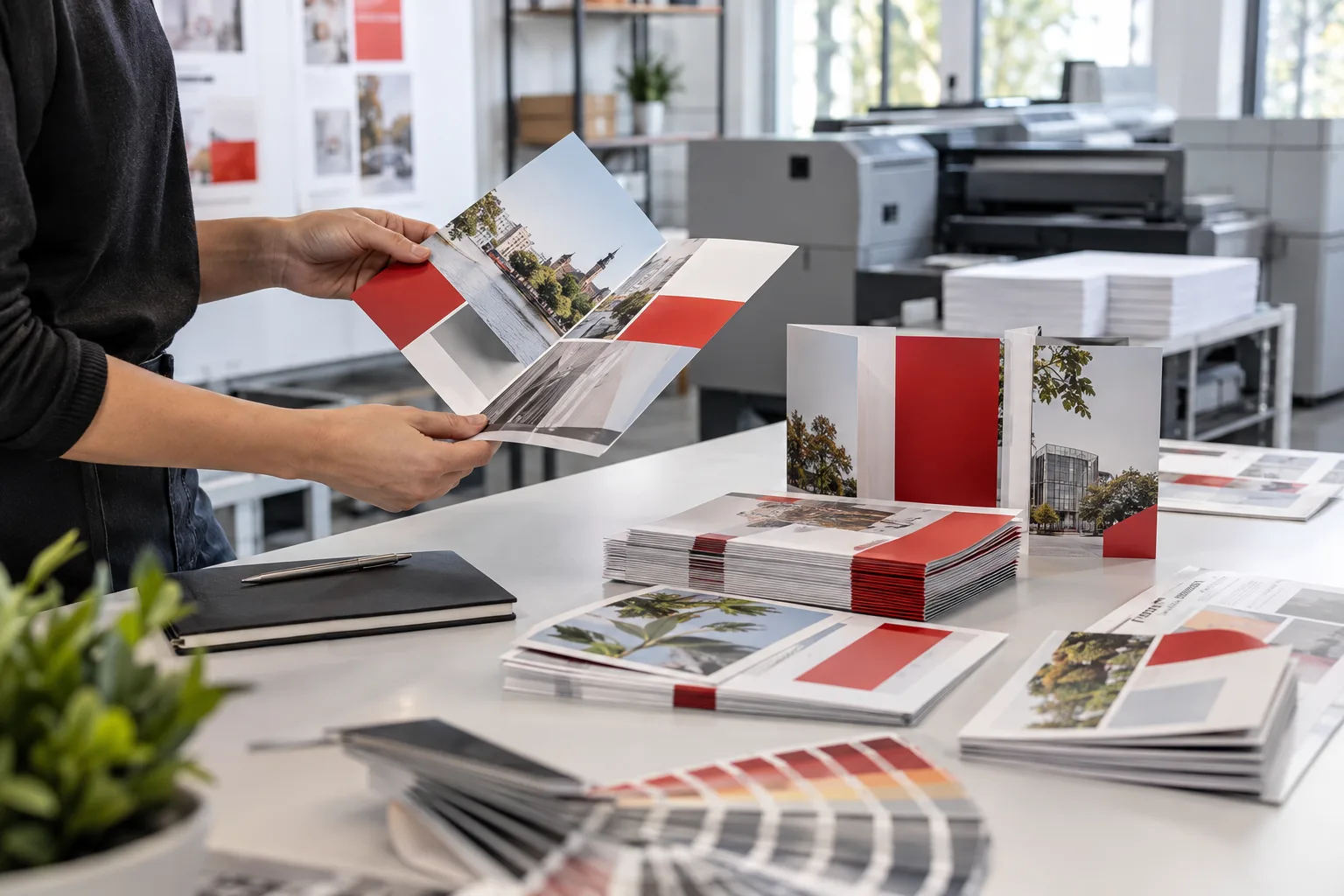
- Single fold: folded once in the middle, e.g. A4 to A5 – four pages.
- Roll fold: two folds where pages roll inward – six pages, ideal for DIN long.
- Accordion fold (Leporello): alternating folds, good for step-by-step content.
- Gate fold: two outer panels fold to the center – especially for presentations.
With roll folds, the inner panel is slightly narrower to fold neatly. We are happy to provide a suitable template.
How to Design an Effective Flyer
- Define your goal: Call, visit, booking, or website visit?
- Strong front page: A clear benefit in few words plus a compelling image.
- Short texts: Subheadings, bullet points, white space.
- Build trust: References, quality seals, experience ("since 1993").
- Call to action: Phone, address, website, and QR code clearly visible.
- Consistent appearance: Colors and fonts from your corporate design.
Paper and Print Run
Lighter papers suffice for handouts, while sturdier papers or matte/glossy coated paper are suitable for premium flyers and price lists. The print run depends on distribution: display, mailbox drop, insert, or trade fair. Larger print runs reduce unit cost but should match content relevance.
Common Mistakes
- Too much text and too many messages.
- Contact details too small or hidden.
- Images in screen resolution (prepare print data correctly).
- Fold placed over text or faces.
How to Measure Flyer Success?
To know if a flyer pays off, make feedback measurable. Proven methods include:
- A unique QR code or web address for the campaign,
- A voucher code tracked upon redemption,
- A simple phone question: “How did you hear about us?”
This helps identify which distribution channels and messages work best and plan the next print run more effectively.
Conclusion
A good flyer is focused, quickly understood, and leads to a concrete action. MYPOINT designs, reviews, and prints your flyers – request an offer.