Guides · Signage & Vinyl Lettering
Vehicle Lettering: Advertising That Goes Wherever You Go
Your company vehicle is a rolling billboard every day. Here’s how to create vehicle lettering that stands out, is easy to read, and lasts long.
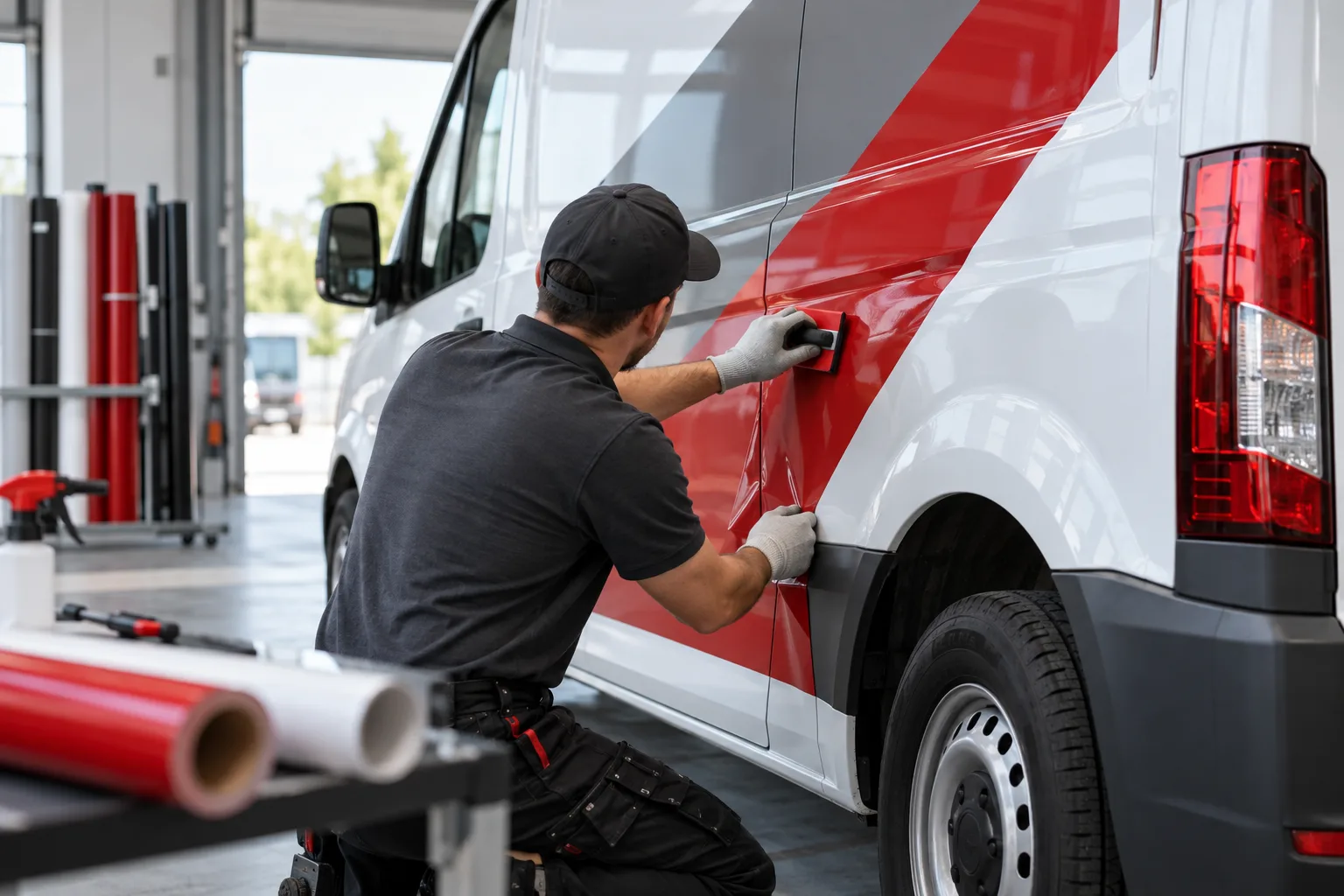 AI-generated image
In short: Effective vehicle lettering quickly shows who you are, what you offer, and how to contact you. For company vehicles, partial lettering with cut vinyl lettering and logos or partial/full wraps with printed film are ideal. High-quality vehicle-grade films last for many years and can usually be removed with minimal residue.
- Keep text minimal, use large fonts, and strong contrast.
- Logo, service, phone number, and website are usually enough.
- Film quality determines durability and removability.
- Professional installation prevents bubbles and peeling.
What Types of Vehicle Lettering Are There?
| Type | Description | Suitable For |
|---|---|---|
| Cut vinyl lettering/logo | Single-color letters and shapes | Subtle, cost-effective lettering |
| Partial wrap with digital print | Printed film on partial areas | Colorful logos, images, gradients |
| Full wrap | Entire vehicle covered with film | Maximum attention, color change |
| Magnetic signs | Removable advertising surface | Private vehicles also used personally |
| Rear window perforated film | Printed on outside, see-through from inside | Rear windows with visibility considerations |
Design Tips for Readability
- Three-second rule: Company name, service, and contact must be readable while driving by.
- Large, clear fonts without decorative flourishes.
- Strong contrast between text and vehicle color.
- Phone number and domain clearly visible – a short domain is easier to remember.
- Consistent branding: use your logo, colors, and fonts from your corporate design.
- Use all sides: Rear and sides are viewed differently – in traffic jams especially the rear.
Which Film Is Right?
Vehicle films are designed to conform to curves and withstand UV rays, car washes, and weather. Cast films are especially dimensionally stable and suited for strongly curved surfaces, while calendered films are for flat surfaces and shorter-term use. Durability depends on film type, color, sun exposure, and maintenance.
Process from Idea to Installation
- Provide vehicle type and photos of all sides.
- Design draft on vehicle template with feedback.
- Production: cutting or printing and laminating the film.
- Installation on a clean, dry vehicle.
- Follow care instructions – avoid car washes for the first few days.
Legal Notes
Covered windows must not restrict necessary visibility; strict rules apply to front and front side windows. For leased or rented vehicles, clarify beforehand if and how lettering is allowed. For business information on vehicles, we recommend consistent and correct company names.
What Are the Benefits of Vehicle Lettering?
A lettered vehicle is on the road every day – in front of customers’ premises, parking lots, and traffic jams. Unlike many other advertising forms, there are hardly any ongoing costs after the initial investment. For businesses operating regionally, vehicle lettering is one of the most cost-effective advertising methods. It also conveys professionalism: customers immediately see the expert company at their doorstep.
Conclusion
Good vehicle lettering is clear, readable, and professionally installed – advertising for you every day. MYPOINT designs, produces, and installs your lettering. Request a quote now.