Guides · Signage & Vinyl Lettering
Signs and Billboards: Materials, Properties, and Applications
Signs and billboards: Which material is best for which purpose? We compare aluminum composite, acrylic glass, PVC foam board, and banners – with tips on applications, design, and installation.
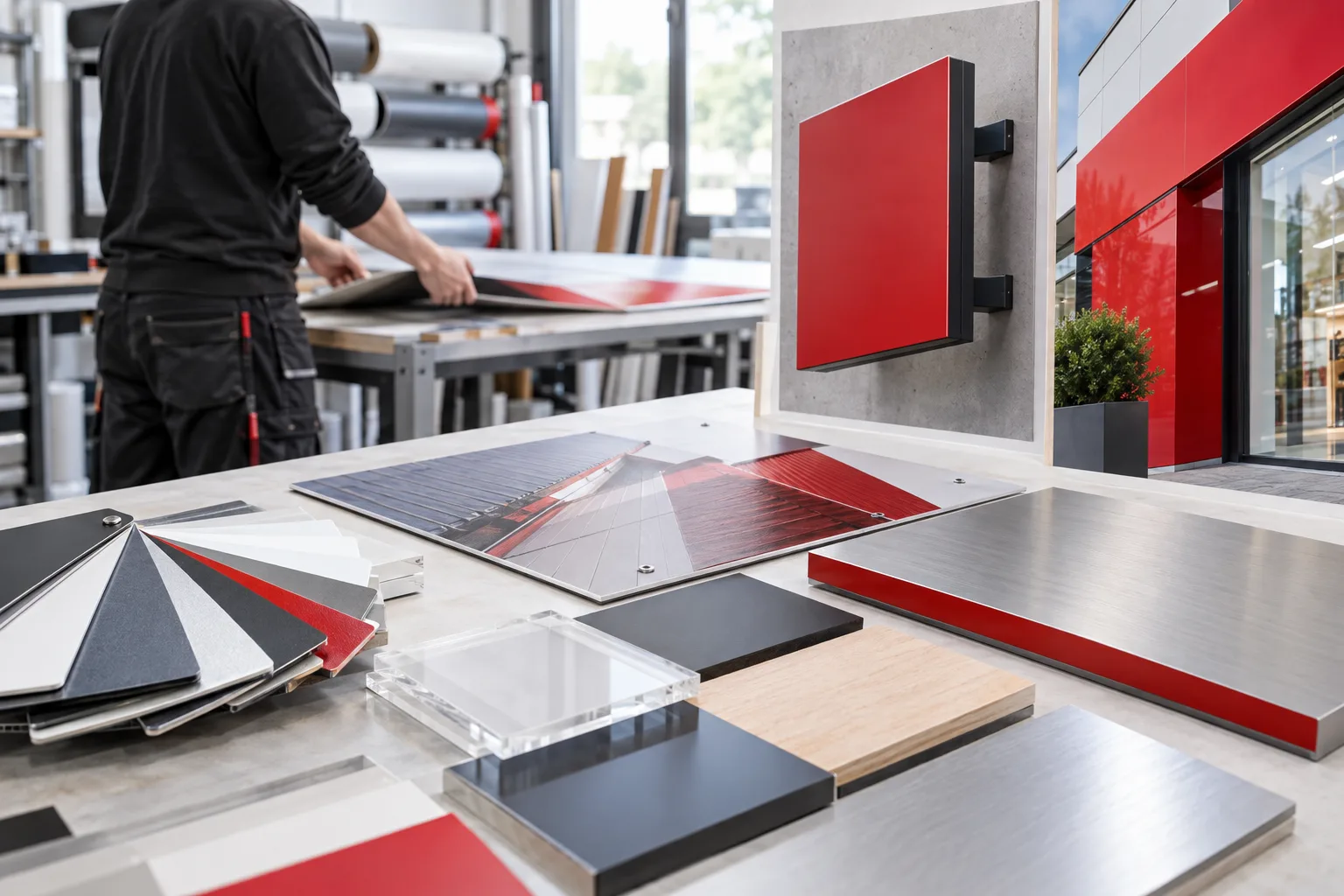 AI-generated image
In brief: The right signs billboards material depends on location, usage, and desired impact. For durable outdoor signs, aluminum composite is the top choice, while acrylic glass excels for high-end practice signs. PVC foam board is ideal for indoor use or temporary advertising, and banners are suited for large, flexible displays.
- Aluminum composite is the standard for weatherproof outdoor signs.
- Acrylic glass offers a premium look for indoor and outdoor use.
- PVC foam board is lightweight, affordable, and good for short-term campaigns.
- PVC banners cover large areas and are versatile.
- Material choice affects durability, appearance, and cost.
Signs Billboards Material: What options are available?
When choosing materials for signs and billboards, several options exist. The main ones are aluminum composite panels, acrylic glass, PVC foam board, PVC banners, as well as corrugated cardboard and hollow chamber panels. Each material has specific properties that affect application, lifespan, and cost.
Which material is best suited for signs and billboards?
The choice of the right signs billboards material depends on the intended location, duration of use, and desired appearance:
- Aluminum composite panels (e.g., Dibond): sturdy, weather-resistant, lightweight, and directly printable. They are the standard for company signs, construction signs, and long-lasting outdoor information signs. Typical thicknesses are 3 mm or 4 mm. With proper installation and UV-resistant printing, lifespan often ranges from 5 to 10 years or more.
- Acrylic glass: offers an elegant, glass-like look and is especially scratch-resistant. Commonly used for practice signs, law firm signs, and reception areas indoors and outdoors. Acrylic glass signs are usually mounted with spacers and come in thicknesses from 4 to 10 mm.
- PVC foam board: very lightweight, cost-effective, and easy to process. Suitable for indoor signage, trade shows, and temporary advertising campaigns. Lifespan indoors is several years; outdoors, the material is only moderately weather-resistant.
- PVC banners: flexible, tear-resistant material for large-scale advertising on construction fences, sports fields, or events. Banners come with eyelets and can be quickly mounted and transported. Typical material weight is 500–700 g/m².
- Corrugated cardboard/hollow chamber panels: very light and inexpensive, mainly for short-term uses like election posters or promotional signs. Outdoors, they last only a few weeks.
Which signs and billboards materials make sense for businesses?
Businesses require different signs for various purposes. The material choice should be tailored to the specific application:
- Company sign on the building: aluminum composite for durability and a professional look.
- Practice or law firm sign: acrylic glass with spacers for a high-quality impression.
- Construction sign: large aluminum composite panels or PVC banners, depending on the size and duration of the project.
- Indoor signage: PVC foam board for room signs, wayfinding, and door signs.
- Advertising banners: PVC banners with eyelets, matching club apparel.
How do sign materials differ in durability and cost?
| Material | Lifespan (Outdoor) | Price Level | Typical Applications |
|---|---|---|---|
| Aluminum composite | 5–10 years | medium | Company signs, construction signs, information signs |
| Acrylic glass | 5–8 years | high | Practice signs, reception, law firm signs |
| PVC foam board | up to 2 years | affordable | Indoor signage, trade shows |
| PVC banners | 1–3 years | affordable | Construction fences, events, advertising banners |
| Hollow chamber panels | weeks to a few months | very affordable | Election posters, promotions |
How to design signs and billboards for maximum impact?
- Font size: Choose font size based on viewing distance. Rule of thumb: at least 7 cm letter height per 10 meters distance.
- Amount of information: Limit to essential details. Too much information reduces readability.
- Contrast: Light text on dark background or vice versa ensures good visibility, especially for outdoor signs.
- Corporate design: Use your company’s logo and colors to increase brand recognition. Tips can be found in the Corporate Design Guide.
- Image resolution: For large signs, a lower resolution (from about 100 dpi) is often sufficient. Details are in the Print Data Guide.
What should I consider for installation and permits of signs?
Mounting depends on the material and surface. Aluminum composite and acrylic glass are often installed with spacers, screws, or frame systems. PVC banners are usually fixed with eyelets and cable ties. Larger advertising installations on buildings or in public spaces may require permits. Check with your local authority and, for rented properties, with your landlord. More information is available in the Imprint and under Contact.
Material choice in practice: examples for the right application
| Project | Recommended Material | Duration |
|---|---|---|
| Company sign on building facade | Aluminum composite, UV-resistant print | several years |
| Practice sign in stairwell | Acrylic glass with spacers | long-term |
| Trade show wall for one season | PVC foam board | short-term |
| Sponsor banner at sports field | PVC banner with eyelets | 1–2 years |
| Construction sign for several months | Aluminum composite or banner, depending on size | medium to long-term |
Frequently Asked Questions about Signs Billboards Material
- How do I properly care for my sign? Use mild cleaning agents and soft cloths. Avoid harsh chemicals to prevent surface damage.
- Can I install my sign myself? Many signs can be installed with basic tools. For larger installations, professional mounting is recommended.
- Which file formats are needed for printing? High-quality prints usually require PDF, EPS, or TIFF files. Details are in the Print Data Guide.
- How long does production take? Production time depends on material and workload. Typically, signs are ready within 5–10 business days.
- What alternatives exist to classic signs? Besides fixed signs, vinyl lettering for vehicles, windows, or walls offers a flexible option. Learn more at Vinyl Lettering.
Conclusion: Choosing the right signs billboards material
The choice of the right material for signs and billboards determines durability, appearance, and cost. Carefully assess your sign’s requirements. Use the advantages of each material purposefully – whether for permanent company signs, prestigious practice signs, or flexible advertising banners. Get advice now and request a quote.
Further information on related topics is available at Vehicle Lettering, Window Lettering, Corporate Design, Print Data Preparation, and Business Cards.